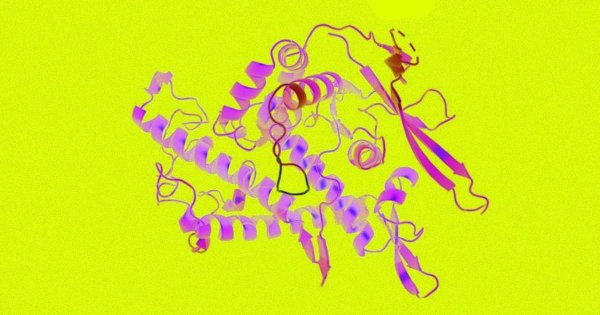
DeepMind, the artificial intelligence company owned by Google's parent Alphabet, unveiled its latest protein-folding algorithm, AlphaFold 2, earlier this week, claiming it could predict protein structures from their amino acid sequences with unprecedented accuracy. The announcement was met with a wave of media attention, but a number of scientists in the field remain unconvinced, according to a report from Business Insider.
While the achievement is widely acknowledged as a significant technical milestone, several researchers argue that the fanfare may be premature. The skepticism centers on whether AlphaFold 2 will actually be a practical tool for the broader scientific community, or if it was fine-tuned specifically to excel at the biennial Critical Assessment of Structure Prediction (CASP) competition, where it achieved the highest score in the event's history.
Max Little, a computer scientist at the University of Birmingham, told Business Insider that the algorithm's performance at CASP does not necessarily translate to real-world applications. "We can't really be sure how well AlphaFold will work when faced with the far more rich and varied array of proteins found in the real world of living organisms," he said.
Competition or Real-World Test?
Critics point out that CASP, despite being a rigorous benchmark, provides a controlled environment that may not reflect the complexity of biological systems. The concern is that AlphaFold 2 was optimized to win the competition, much like a video game score, rather than to solve the messy problems researchers encounter daily.
John Moult, chair of CASP and a professor at the University of Maryland, defended the competition's relevance. "CASP is not a game, it's a scientific experiment designed to test folding methods in close-to-real-life situations," he said in an interview with Business Insider. He also acknowledged the long history of overblown claims in the field, adding, "Fifty years of listening to false claims about this problem has made me the world's biggest skeptic."
Moult, however, expressed confidence in DeepMind's results after careful review. "I have looked at these results very carefully … Clearly, this is just the beginning of what DeepMind and others will achieve with these sorts of approaches," he said.
Lack of Shared Code Raises Questions
Another major point of contention is that DeepMind has not yet released the code for AlphaFold 2, making it impossible for other researchers to independently verify or build upon the work. As one scientist bluntly told Business Insider, "Until they share their code, nobody in the field cares." This lack of transparency is a departure from typical scientific practice, where methods are published and made available for replication.
Despite the criticism, the achievement itself is not in dispute. Protein folding, the process by which a linear chain of amino acids folds into a three-dimensional structure, is a problem that has eluded scientists for decades. A reliable computational method to predict these structures could accelerate research in drug discovery, disease understanding, and synthetic biology.
The debate underscores a growing tension in the scientific community between the excitement generated by AI breakthroughs and the need for rigorous, reproducible evidence. While DeepMind's algorithm may represent a genuine step forward, its ultimate value will depend on how well it performs outside the confines of a competition and whether the company opens its methods to scrutiny.
For now, the scientific community remains divided, with some calling for caution and others acknowledging the potential. As Moult noted, the results are promising, but the real test lies ahead.














Leave a Comment