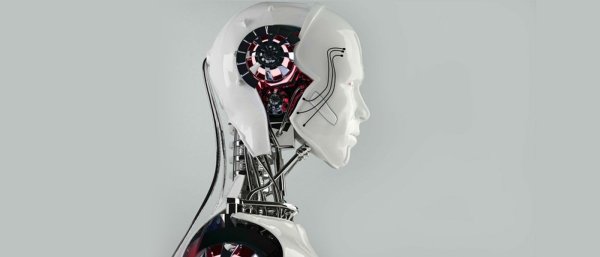
A prominent Russian computer scientist told an international gathering in New York City that robots capable of exhibiting human-like emotions are only a few years away, a claim that has stirred both excitement and skepticism in the artificial intelligence community.
Professor Alexei Samsonovich, speaking at the 2016 Annual International Conference on Biologically Inspired Cognitive Architectures (BICA), said that Russia is "on the verge" of a significant breakthrough in AI—machines that can feel and understand emotions, grasp narratives, and learn independently. The announcement, made during the conference held in Manhattan, did not include specific technical details about the research or a timeline beyond "several years."
In an interview with Digital Trends, Samsonovich elaborated on his vision, suggesting that the recent surge in AI publications and increased investment from governments and corporations would enable the creation of "a machine capable of feeling human emotions and exhibiting human-level socially emotional intelligence in a variety of settings." He stressed that the goal is not to build conscious machines, arguing that consciousness is an unverifiable and ultimately unproductive target. Instead, he envisions robots with distinct internal architectures that behave in ways that lead people to perceive them as alive and socially engaged.
"When you will see this kind of behavior exhibited consistently over time in many circumstances and without occasional 'presence breaks,' you will believe that this entity is alive and is in a social contact with you," Samsonovich told Digital Trends, describing a future where humans interact with emotionally expressive robots as natural companions.
Why the Claim Matters
The assertion comes amid a broader global race to advance AI capabilities, with tech giants and governments pouring billions into research. While current AI systems excel at narrow tasks like image recognition or language translation, the prospect of machines that genuinely feel—or convincingly simulate—emotions raises profound questions about human-machine relationships, ethics, and the definition of intelligence.
Samsonovich's remarks, however, have been met with caution by some experts who note that the field of emotional AI remains largely theoretical. The lack of published evidence or a clear research roadmap from the Russian team has led to calls for more transparency before such bold predictions are taken at face value.
Despite the skepticism, the idea of emotionally aware robots is not new. Researchers worldwide have explored affective computing, aiming to teach machines to recognize and respond to human emotions. But Samsonovich's claim of an imminent breakthrough, made at a respected academic conference, adds a new dimension to the debate—one that could have significant implications for industries ranging from healthcare to customer service, where empathetic machines might one day play a role.
For now, the scientific community awaits further details, while the public is left to ponder a future where the line between artificial and genuine feeling becomes increasingly blurred.
















Leave a Comment