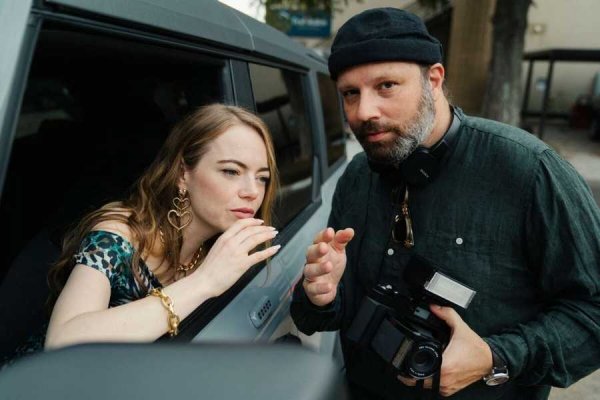
Greek director Yorgos Lanthimos, known for his unsettling social satires, is adding another project to his crowded development slate: an adaptation of Jean-Patrick Manchette's 1977 noir thriller Fatale. Confirmed by sources close to the production, Lanthimos will write and direct, with James Schamus, the veteran indie producer and former Focus Features head, attached as producer.
The announcement comes as Lanthimos is already preparing Bugonia, a sci-fi feature, and has long been attached to adapt Ottessa Moshfegh's novel My Year of Rest and Relaxation. The Fatale project, however, has been quietly in the works, and its emergence signals the director's continued interest in genre material that blends violence with sharp social critique.
Manchette, a French crime novelist who died in 1995, is often credited with reinventing the detective novel as a vehicle for anarchic satire. Fatale centers on Aimée, a professional assassin who arrives in a small port town and, posing as a beautiful newcomer, systematically pits the local elite against one another. The novel's plot, which echoes the classic Red Harvest structure, culminates in a brutal confrontation that exposes the corrupt underbelly of bourgeois society.
Why Lanthimos Is Drawn to the Material
For followers of Lanthimos's work, the appeal of Fatale is clear. The novel's themes—social satire, unflinching violence, and sexual obsession—are recurring motifs in his films, from The Lobster to Poor Things. The lead role of Aimée, a cold-blooded manipulator who descends into nihilistic chaos, seems tailor-made for the kind of performance that has become a hallmark of his collaborations with Emma Stone, though no casting has been announced.
The project's timeline remains fluid. Lanthimos's immediate commitments to Bugonia and the Moshfegh adaptation could push Fatale further down the line. However, the recent announcement that Christopher McQuarrie is developing a film adaptation of Manchette's Three to Kill, starring Colin Firth, for Amazon, may increase interest in the author's work and accelerate the production of Fatale.
Manchette's novels have long been admired by cinephiles, but they have rarely been adapted for the screen. The renewed attention from high-profile filmmakers like Lanthimos and McQuarrie could introduce his sharp, cynical worldview to a wider audience.
For now, audiences can anticipate Lanthimos's next releases while Fatale remains a tantalizing prospect—a project that combines the director's distinctive vision with a source novel that is as brutal as it is clever.




Leave a Comment