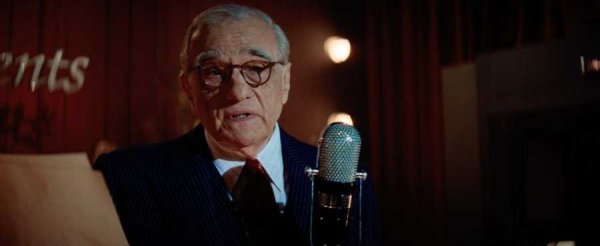
Martin Scorsese’s long-gestating film about Jesus Christ is taking shape in ways that reflect the director’s own spiritual and cinematic journey, according to a newly published excerpt from an early draft of the script. The passage, which appeared in a book of interviews between Scorsese and Father Antonio Spadaro, offers a rare glimpse into a project that has been shrouded in ambiguity since it was first announced last year.
The excerpt, shared with Variety by Spadaro, opens with a series of stark, evocative images: a painted face of Jesus flickering in darkness, a wooden cross above a bed in a tenement apartment, church windows, a marble Pietà, and a child’s drawings for a fictional film titled The Eternal City. The visual montage is accompanied by a voiceover in which Scorsese recalls growing up surrounded by mass-produced portraits of Jesus—images that shaped a common idea of his appearance: “handsome, with wonderful long hair and beard, ascetic, pious.”
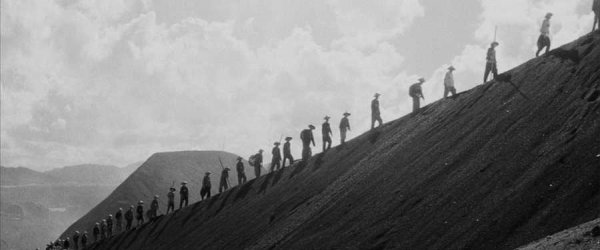
Scorsese’s narration then shifts to his early cinematic ambitions. He describes wanting to make a film about Christ set in the modern world, shot in 16mm black-and-white on the streets of New York, with apostles in suits and ties and a crucifixion on the West Side piers. But that plan changed after he saw Pier Paolo Pasolini’s The Gospel According to St. Matthew. “The setting wasn’t modern, but the feeling it conveyed was,” the voiceover states. “Pasolini showed us a Jesus who was often heated and angry. Who fought… His film had made what I had in mind become quite superfluous, but it inspired me to keep going.”
The excerpt is part of Dialoghi sulla fede (Dialogues on Faith), a recently published Italian book based on a series of conversations between Scorsese and Spadaro. In those interviews, Scorsese elaborated on his intent for the film, which adapts Shūsaku Endō’s novel A Life of Jesus. Spadaro told Variety that the director hopes to recover “the original experience that he had of the fully embodied, positive, open, complex spirituality in which he was trained,” filtering that perspective through his own cinematic lens.
The project marks a continuation of Scorsese’s recent religious-themed work, which has included Silence (2016) and the upcoming series for Fox Nation. The director has also been linked to a separate religious series, though details remain sparse. The new film, which Scorsese has said would not be a straight narrative, will feature staged scenes and the director himself appearing in the frame.
Echoes of Killers of the Flower Moon
The script excerpt’s blending of personal memory and cinematic references has drawn comparisons to the closing sequence of Killers of the Flower Moon, which Scorsese used to reflect on the act of storytelling itself. The new material suggests a similar self-referential approach, with the director placing himself within the narrative as both observer and participant.
Scorsese’s filmography has long grappled with questions of faith, guilt, and redemption, from The Last Temptation of Christ (1988) to Silence. The upcoming project, still untitled, appears to be his most personal exploration of the subject to date, weaving together childhood memories, cinematic history, and a desire to present a more positive image of spirituality.
While no release date has been announced, the early draft excerpt offers a tantalizing hint of what audiences might expect: a film that is less a traditional biopic and more a meditation on how Jesus has been imagined and reimagined through art and culture. For now, Scorsese’s own words—enigmatic as ever—remain the clearest guide: “I don’t know what it’s going to be, exactly. I don’t know what you’d call it.”


Leave a Comment