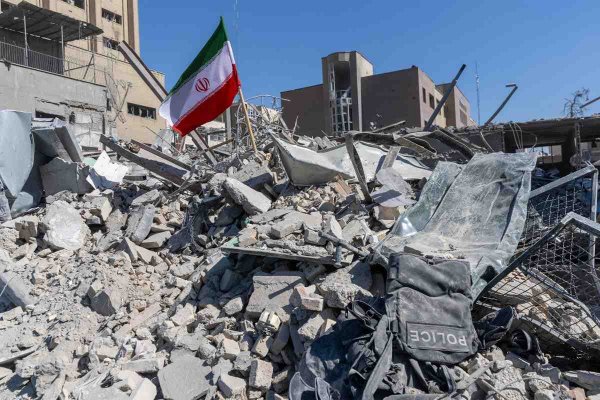
The Islamic Revolutionary Guard Corps (IRGC) has declared that Iran is prepared for a prolonged conflict that could cripple the world economy, as it continues to block the Strait of Hormuz, a vital artery for global oil shipments. The warning, reported by Le Monde and Reuters, comes amid escalating tensions following US and Israeli strikes on Iranian leadership.
“Get ready for the oil barrel to be at $200 because the oil price depends on the regional stability which you have destabilised,” said Ebrahim Zolfaqari, an IRGC spokesperson, in a statement to Reuters. The threat underscores the fragility of global energy markets as the strait remains closed for a second week.
The crisis began on February 28, when US and Israeli missile strikes killed Iran’s supreme leader Ali Khamenei, the IRGC commander, the defense minister, and other senior officials. The attacks also claimed over 1,000 civilian lives, including at least 175 people killed when a Tomahawk missile hit an elementary school. The Pentagon has opened an investigation into that incident.
Contrary to expectations of a quick collapse, Iran’s regime has retaliated with missile and drone attacks on US allies across the Middle East. The IRGC has vowed that not a “single liter of oil” will pass through the Strait of Hormuz to hostile nations. The strait, which connects the Persian Gulf to the Gulf of Oman, is the only sea route for supertankers from Saudi Arabia, Kuwait, Qatar, the UAE, and Iran, carrying roughly 20% of the world’s oil supply.
On Thursday, explosions struck two oil vessels at an Iraqi port, and three other cargo ships were set ablaze in the Gulf. The IRGC claimed responsibility for at least one attack on a Thai bulk carrier. These incidents followed President Donald Trump’s declaration that the US had already won the war, raising questions about the administration’s assessment of the situation.
New Leadership, Same Hard Line
Iran’s newly appointed supreme leader, Mojtaba Khamenei, has reaffirmed the closure of the Strait of Hormuz in his first public message since taking office. He also demanded the closure of all US bases in the region, according to Reuters.
The impact on oil markets has been immediate. Brent crude prices surpassed $100 per barrel last week for the first time since 2022, peaking at nearly $120 on Monday. US gasoline prices have averaged over $3.50 per gallon, with West Coast prices significantly higher, according to AAA.
The International Energy Agency (IEA) called the disruption the largest in history and announced the release of 400 million barrels from emergency stockpiles, with the US contributing 172 million barrels from its Strategic Petroleum Reserve. Despite this, Brent crude rose more than 8% overnight, as reported by Axios.
President Trump acknowledged the potential windfall for US producers, writing on Truth Social, “The United States is the largest Oil Producer in the World, by far, so when oil prices go up, we make a lot of money.”
The situation remains fluid, with no immediate sign of de-escalation. The global economy, still recovering from previous shocks, now faces the prospect of sustained high energy costs.











Leave a Comment