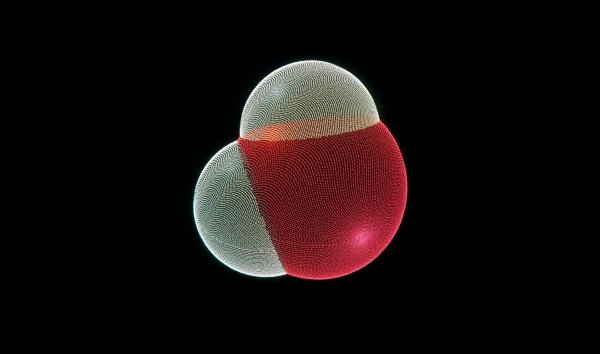
A team of physicists at the University of Houston has reported a new catalyst that could lower the cost of producing hydrogen from water, a key step toward making the clean fuel more practical. The catalyst, made from ferrous metaphosphate grown on a conductive nickel foam platform, is both cheaper and more durable than many existing options, according to the researchers.
Lead author Zhifeng Ren, Anderson professor of physics at the university, said the material offers a significant improvement over current alternatives. “Cost-wise, it is much lower and performance-wise, much better,” Ren told University of Houston News. He noted that some catalysts are effective but fail quickly, which limits their usefulness. “Some catalysts are outstanding but are only stable for one or two hours. That’s no use,” he added.
The discovery addresses a long-standing bottleneck in water electrolysis, the process that splits water into hydrogen and oxygen. While hydrogen is the desired product, the reaction also produces oxygen, and the oxygen evolution reaction has historically relied on expensive noble metals like ruthenium, platinum, or iridium. The new catalyst, based on earth-abundant elements, reportedly outperforms those costly materials, according to principal investigator Shuo Chen.
“In this work, we discovered a highly active and stable electrocatalyst based on earth-abundant elements, which even outperforms the noble metal based ones,” Chen told UH News. “Our discovery may lead to a more economic approach for hydrogen production from water electrolysis.”
Why Hydrogen from Water Matters
Water splitting can be driven by electric current or photocatalysis, but direct solar-powered splitting is inefficient because water absorbs only a narrow part of the light spectrum. A more viable approach is to use solar-generated electricity to power the electrolysis. This method avoids the carbon emissions associated with conventional hydrogen production, such as coal gasification or steam methane reforming.
Hydrogen itself is a versatile energy carrier. Unlike solar or wind power, it can be stored easily, making it a valuable complement to intermittent renewable sources. Paul C. W. Chu, chief scientist at the Texas Center for Superconductivity, emphasized the potential of hydrogen as a primary energy source. “Hydrogen is the cleanest primary energy source we have on earth,” Chu told UH News.
The University of Houston team’s work could bring that vision closer to reality by reducing the cost barrier that has hindered widespread adoption of water-based hydrogen production. The new catalyst’s durability and affordability may make it suitable for large-scale applications, though further testing and development are likely needed before commercial deployment.
As the world seeks to decarbonize energy systems, innovations like this one offer a path toward a cleaner fuel that can be produced without adding to atmospheric carbon. The research, published by the university, adds to a growing body of work aimed at making green hydrogen economically competitive with fossil fuels.















Leave a Comment