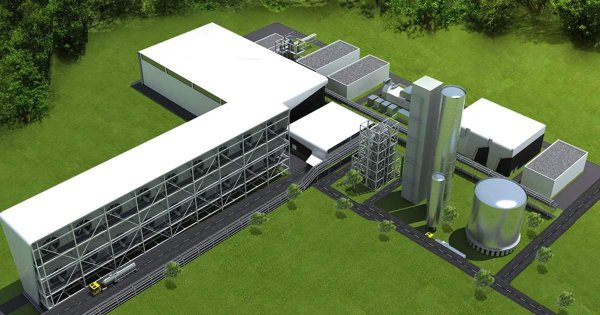
Carbon Engineering, a Canadian clean technology firm, announced it has secured financing to build a large-scale facility designed to extract carbon dioxide from the atmosphere. The project, once operational, aims to remove an amount of CO2 equivalent to the annual absorption of 40 million trees, according to the company.
The funding round, described by the company as the largest ever for a direct air capture (DAC) venture, includes backing from Microsoft co-founder Bill Gates and several major energy corporations. The investment underscores a growing belief in the viability of DAC as a tool to combat climate change while allowing continued use of fossil fuels.
Steve Oldham, chief executive of Carbon Engineering, said in a statement that the financing reflects increased recognition of both the benefits and the commercial readiness of the technology. He added that the approach could help the world address climate change while still supplying the energy needed to sustain economies.
Details about the technology remain sparse, but the company's website indicates the facility will either store the captured carbon underground or convert it into synthetic fuel for use in conventional vehicles. The 30-acre site is expected to be one of the first commercial-scale DAC plants globally.
Investors eye carbon offset opportunities
Among the investors are oil giants Chevron and Occidental Petroleum Corp. In an interview with the Calgary Herald, Oldham hinted that some backers might eventually become customers, using the technology to offset their own emissions. He noted that it would be a reasonable assumption that companies investing in Carbon Engineering would also be interested in purchasing its services.
The announcement comes amid a broader push for negative emissions technologies, which are seen as essential to meeting global climate targets. While DAC remains costly, proponents argue that scaling up could drive down costs and make it a practical complement to emissions reductions.
Carbon Engineering's project is part of a wave of initiatives exploring carbon capture, with other firms pursuing different methods, such as systems that generate electricity while removing CO2. The sector is attracting attention from both policymakers and private investors seeking ways to address the growing concentration of greenhouse gases in the atmosphere.
The company has not disclosed the total amount raised or a timeline for construction, but the backing from major industrial players suggests a level of confidence in the technology's future. As the world grapples with the challenges of decarbonization, projects like this may play a pivotal role in the transition to a lower-carbon economy.

















Leave a Comment