
Energy Vault, a company with operations in Switzerland and California, has closed a $100 million series C funding round to accelerate deployment of its gravity-based energy storage system, which uses massive suspended bricks to hold and release electricity. The investment, reported by PV Magazine, will support expansion into the United States, the Middle East, Europe, and Australia.
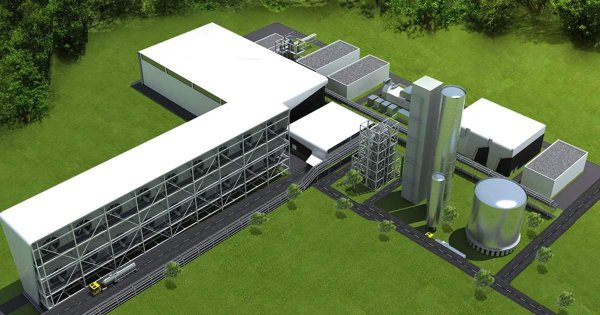
The technology operates on a straightforward principle: during periods of low electricity demand, surplus power—often from renewable sources like solar or wind—is used to hoist 35-metric-ton bricks up a 35-story tower. When demand spikes, the bricks are lowered, and the kinetic energy from their descent is converted back into electricity by a generator, feeding the grid during peak hours such as early morning and evening.
In April 2021, the company introduced its EVx platform, a modular system designed to handle both short-duration storage (two to four hours) and longer discharge windows (five to 24 hours). This flexibility positions the technology as a potential complement to conventional batteries, which typically provide shorter bursts of power.
Why Gravity Storage Is Gaining Attention
Gravity-based storage is part of a broader push to find cost-effective, long-duration solutions for renewable energy intermittency. Unlike lithium-ion batteries, which rely on mined materials and degrade over time, the brick-lifting system uses readily available materials and has a longer operational lifespan, according to the company's design specifications.
Energy Vault's approach has drawn interest from grid operators and utilities looking to integrate higher shares of renewables without compromising reliability. The company's funding round signals growing investor confidence in mechanical storage alternatives, though the technology has yet to be deployed at full commercial scale.
The $100 million injection will fund pilot projects and early commercial installations. Energy Vault has not disclosed specific project sites or timelines, but the company's stated goal is to make the EVx platform a mainstream option for grid-scale storage.
While some observers initially viewed the hanging-brick concept as a novelty, the engineering behind it is grounded in established physics. The system stores energy by raising mass and releases it by lowering that mass, a method that has been used in pumped-hydro storage for decades. Energy Vault's innovation lies in adapting this principle to a modular, tower-based design that can be deployed in diverse geographic settings.
The company emphasizes that its system stores energy but does not generate it; it must be paired with a power source, typically renewable. This clarification addresses early confusion about the technology's role in the energy mix.
As renewable energy capacity grows worldwide, the need for flexible storage options becomes more acute. Energy Vault's gravity-based approach offers one potential path, though its commercial viability will depend on cost, efficiency, and reliability in real-world operations. The coming years will show whether the brick-dropping platform can move from pilot to mainstream.



















Leave a Comment