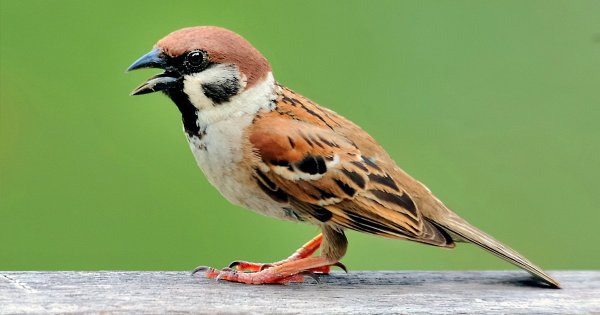
When San Francisco’s streets emptied in the spring of 2020, the city’s white-crowned sparrows did something scientists had never observed before: they traded their loud, simple calls for the more elaborate melodies typically heard in rural areas. The shift, documented in a study published Thursday in the journal Science, offers a rare glimpse into how quickly wildlife can adapt when human-made noise suddenly disappears.
White-crowned sparrows are a common sight in both urban and rural parts of the Bay Area. In the city, they had long been known to belt out shorter, higher-pitched songs to compete with traffic and construction. But with lockdowns silencing the streets, the birds began producing songs with a richer, more complex structure — similar to those of their counterparts living outside the city limits.
Elizabeth Derryberry, a behavioral ecologist at the University of Tennessee and the study’s lead author, described the situation as a “natural experiment” that could only happen by chance. “The pandemic has been terrible in a lot of ways,” she told Wired. “But as a scientist, there’s sort of this exciting opportunity for a natural experiment there: We remove noise from a whole soundscape and see what happens.”
For ornithologists, the finding was particularly striking because previous research had only been able to study birds under artificially louder conditions. Scientists could introduce noise to test how birds responded, but they could never push sound levels below the existing baseline of a city. The pandemic provided that unprecedented low-noise period, and the sparrows’ reaction upended long-held assumptions about how much urban birds rely on shouting to be heard.
Even with softer singing, Derryberry noted, the birds’ calls were audible at greater distances than before. “Even though they sing more softly, you can hear birds at a greater distance now,” she explained to Wired. That paradox — quieter songs traveling farther — suggests that the acoustic environment, not just the birds’ effort, plays a crucial role in communication.
Why the Quiet Changed Their Song
The white-crowned sparrow’s song is not just a simple sound; it carries meaning for territory defense and mate attraction. In the city, the need to be loud had forced birds to sacrifice the intricacy of their notes. With the noise gone, they could afford to sing more like their rural relatives, whose songs are known to be more attractive to potential mates. The change happened within a single breeding season, a speed that surprised even the researchers.
The study adds to a growing body of evidence that the pandemic’s lockdowns created a unique window for observing animal behavior in real time. From fewer traffic accidents to clearer skies, the global pause had measurable effects on the environment. The sparrows’ story, however, is among the first to show a direct behavioral change in a wild animal linked to the drop in human activity.
While the researchers caution that the findings are specific to this species and location, they suggest that urban noise pollution may have more subtle effects on wildlife than previously recognized. The study also raises questions about what happens now that traffic has returned: will the sparrows revert to their louder, simpler songs, or will the new melodies persist?
For now, the research stands as a reminder that even small changes in our daily routines can have unexpected consequences for the natural world.


















Leave a Comment