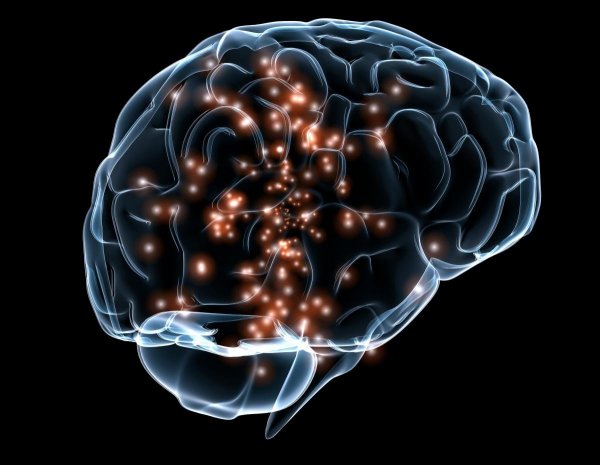
New research from the Salk Institute for Biological Studies suggests that the human brain's memory capacity may be roughly ten times greater than previously believed, potentially reaching the scale of a petabyte—comparable to the storage capacity of the entire World Wide Web. The findings, published in the journal eLife, stem from precise measurements of synaptic connections in the hippocampus, a region critical for memory formation.
Led by Salk professor Terry Sejnowski and staff scientist Tom Bartol, the team constructed a three-dimensional reconstruction of rat hippocampal tissue to examine the physical characteristics of synapses—the junctions where neurons communicate. Their observations revealed that pairs of synapses often send duplicate signals, a phenomenon occurring in about 10% of hippocampal connections. Initially considered insignificant, this duplication provided a unique opportunity to measure synaptic size differences with unprecedented accuracy.
Prior classifications grouped synapses into only three size categories: small, medium, and large. However, the Salk team's measurements showed that the size difference between paired synapses averaged only about 8%, a remarkably small margin that surprised the researchers. "We were amazed to find that the difference in the sizes of the pairs of synapses were very small, on average, only about eight percent different in size. No one thought it would be such a small difference. This was a curveball from nature," Bartol explained.
This 8% variance became a critical input for algorithmic models of brain information storage. By plugging this value into their models, the team estimated that synapses could exist in approximately 26 distinct size categories—ten times more than previously assumed. In computational terms, 26 categories correspond to about 4.7 bits of information, a substantial increase from the earlier estimate of one to two bits for hippocampal memory storage.
Implications for Brain Efficiency and Computing
Beyond memory capacity, the study offers a potential explanation for the brain's remarkable energy efficiency. The waking adult brain generates roughly the same power as a dim light bulb, yet it performs complex computations with high accuracy. The researchers propose that synapses may continuously adjust their size—every 2 to 20 minutes—based on incoming signals, effectively averaging out success and failure rates to maintain reliable transmission.
Sejnowski described the findings as "a real bombshell in the field of neuroscience," noting that the work reveals a design principle for how hippocampal neurons achieve high computational power with low energy consumption. The discovery could inform the development of more energy-efficient computers, particularly those employing deep learning and artificial neural networks, which are used for tasks like speech recognition and object detection.
The study's co-senior author, Kristen Harris, emphasized the precision of the synaptic size matching, stating that the results "lay the foundation for whole new ways to think about brains and computers." The collaboration between the Salk team and other researchers marks a new chapter in understanding learning and memory mechanisms.
While the findings are based on rat tissue, the fundamental principles are likely applicable to human brains, given the evolutionary conservation of hippocampal structure. However, further research is needed to confirm whether human synapses exhibit similar size distributions and to explore the functional consequences of this finer granularity in memory storage.















Leave a Comment