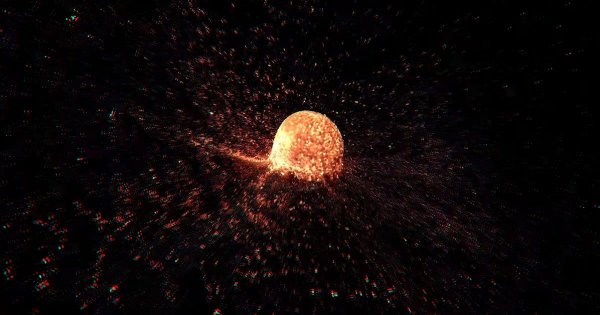
Astronomers have captured the sharpest images yet of the asteroid Hygiea, revealing a nearly spherical shape that could earn it a new title: the smallest dwarf planet in the solar system. The observations, made with the SPHERE instrument on the European Southern Observatory's Very Large Telescope in Chile, provide the clearest view of this object located in the main asteroid belt between Mars and Jupiter.
Hygiea, which measures about 430 kilometers in diameter, was already known to orbit the Sun, not be a moon, and have a region around it that is not cleared of debris—three of the four conditions required for dwarf planet status. The missing piece was whether it had a round enough shape, a detail that the new high-resolution images have now confirmed.
“Thanks to the unique capability of the SPHERE instrument on the VLT, which is one of the most powerful imaging systems in the world, we could resolve Hygiea’s shape, which turns out to be nearly spherical,” said lead researcher Pierre Vernazza in a statement. “Thanks to these images, Hygiea may be reclassified as a dwarf planet, so far the smallest in the Solar System.”
The findings, published in the journal Nature Astronomy, rely on observations that push the limits of ground-based telescopy. SPHERE, which stands for Spectro-Polarimetric High-Contrast Exoplanet Research, is designed to block starlight and detect faint objects, but it also excels at resolving the surfaces of small bodies in our solar system.
What Makes a Dwarf Planet?
Under the definition set by the International Astronomical Union, a dwarf planet must satisfy four criteria: it must orbit the Sun, it must not be a satellite of another body, it must not have cleared its orbital neighborhood of other debris, and it must have sufficient mass for its own gravity to pull it into a roughly spherical shape. Hygiea had already met the first three, and now the shape requirement appears to be satisfied as well.
If the classification is accepted, Hygiea would replace Ceres as the smallest known dwarf planet in the solar system. Ceres, also located in the asteroid belt, has a diameter of about 940 kilometers. The new candidate is less than half that size.
The observations also provide insights into Hygiea's surface and composition. The images reveal a relatively uniform surface, with no large impact craters visible, which could indicate that the object has been resurfaced over time, possibly by collisions or internal activity.
Astronomers note that the reclassification of Hygiea would add to the growing list of dwarf planets, which currently includes Pluto, Eris, Haumea, Makemake, and Ceres. Each of these bodies has been studied in increasing detail as telescopes improve.
The European Southern Observatory, which operates the Very Large Telescope, has been at the forefront of such observations. The SPHERE instrument, in particular, has been used to study a range of objects, from exoplanets to asteroids, providing data that help refine our understanding of the solar system's formation and evolution.
While the new images are a significant step, the final decision on Hygiea's status rests with the International Astronomical Union, which has yet to formally vote on the matter. Until then, Hygiea remains an asteroid in the official catalog, but one that may soon be reclassified.











Leave a Comment